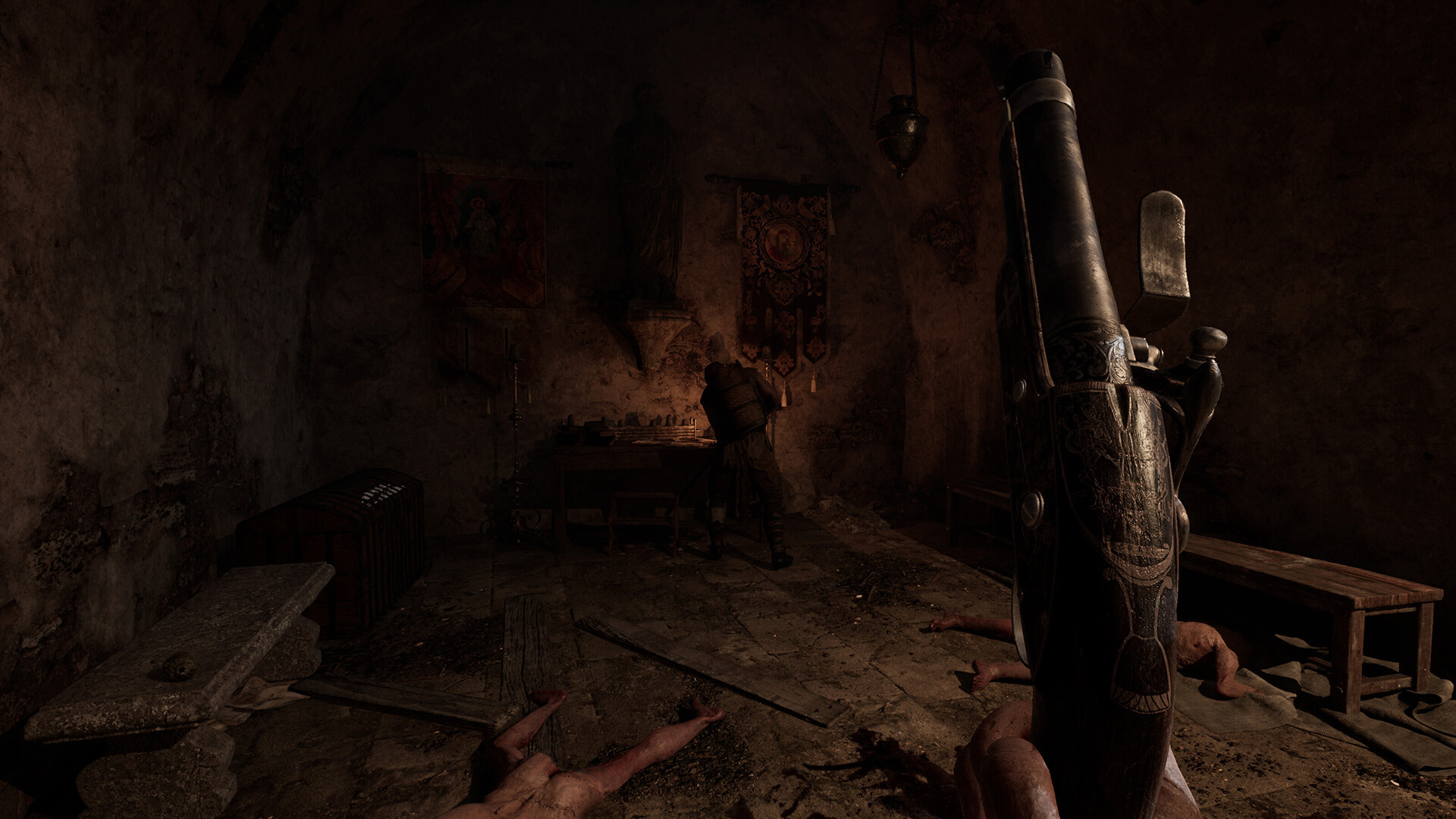
In modern military shooters, reloading is often a passive animation during which players are completely helpless. In HUNGER, reloading a 19th-century flintlock musket is an active, multi-phase survival decision.
How the Staged Reload System Operates
Every muzzle-loading long gun is broken down into distinct physical stages:
1. **Stage 1 (Priming the Pan)**: The shooter flips open the frizzen and pours fine priming powder into the lock pan before snapping it closed.
2. **Stage 2 (Charging the Barrel)**: The shooter tears the paper cartridge, pours the main black powder charge down the muzzle, inserts the lead ball, and draws the steel ramrod to drive it home.
3. **Stage 3 (Cock & Ready)**: The ramrod is returned to its brass stock pipe, and the hammer is drawn back to full cock.
The Tactical Advantage of Interruption
If a player is in the middle of Stage 2 and suddenly hears an enemy lunging with a cavalry sabre, they can instantly hit their quick-swap key to draw a rapier and parry the incoming blow. Once the melee threat is cleared, switching back to the musket will resume immediately from Stage 3 rather than restarting the entire 4.5-second sequence.
This system rewards situational awareness, encouraging players to load their weapons incrementally while navigating between cover positions.